The Golden Age of Words: Tudor Literature & Poetry
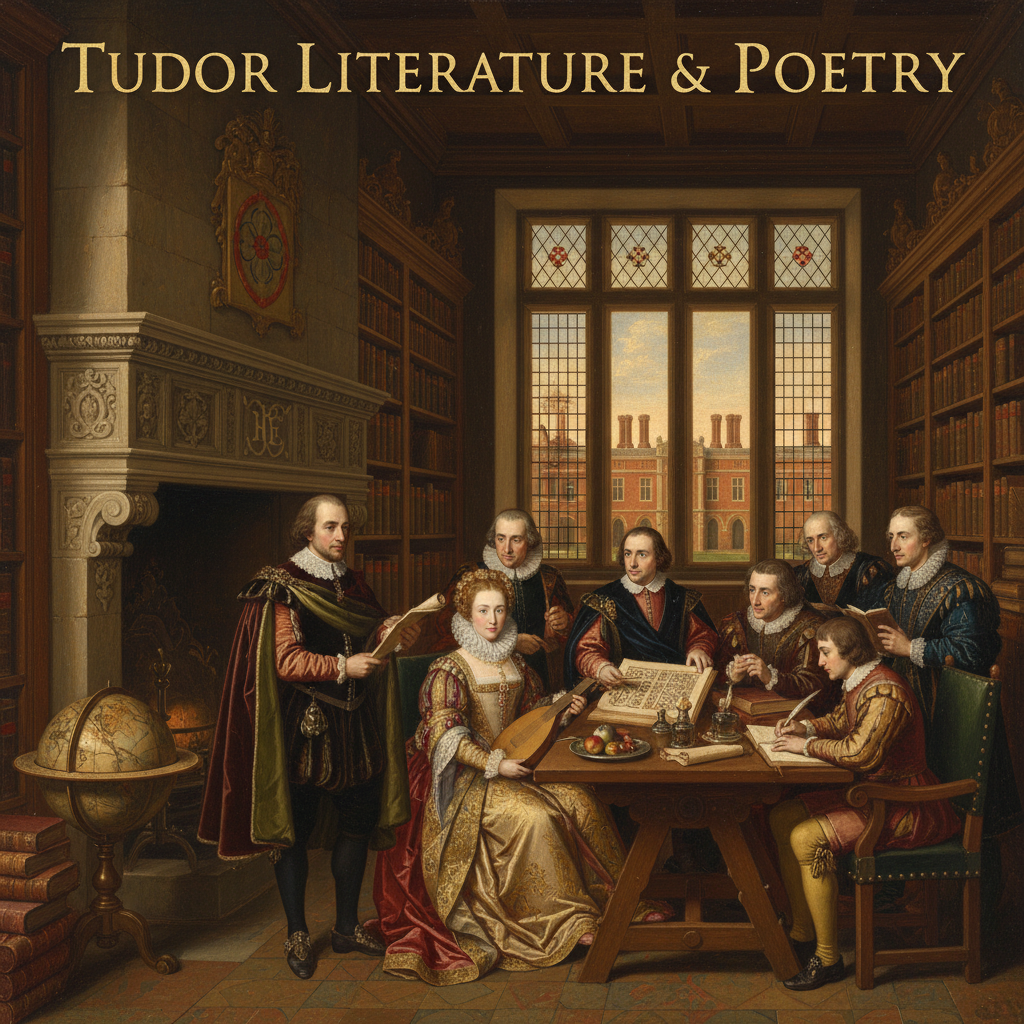
The Tudor era, a period often remembered for its powerful monarchs, religious upheaval, and dramatic political shifts, was also a vibrant crucible for the English language and its literary expression. Far from being a mere backdrop to royal machinations, literature during this time underwent a profound transformation, laying the groundwork for the unparalleled brilliance of the Elizabethan age. From the humanistic prose of Thomas More to the soaring sonnets of Wyatt and Surrey, and the epic narratives that would define a nation, Tudor literature offers a captivating window into the minds, morals, and aspirations of a society grappling with change and discovering its voice.
The Dawn of a New Literary Era: Early Tudor Humanism
The accession of Henry VII in 1485 marked the end of the Wars of the Roses and ushered in an era of relative stability, which, coupled with the burgeoning influence of the Renaissance from continental Europe, profoundly impacted English intellectual life. Humanism, with its emphasis on classical learning, human potential, and civic virtue, found fertile ground among scholars and courtiers alike. This intellectual movement encouraged a return to original classical texts, a focus on education, and an eloquence in both Latin and the vernacular.
Sir Thomas More stands as the towering figure of early Tudor humanism. His most famous work, Utopia (1516), written in Latin, presented a satirical vision of an ideal commonwealth, critiquing contemporary English society through the lens of a fictional island. More's sharp intellect and moral convictions, which ultimately led to his execution by Henry VIII, are palpable in his writings, making him a martyr for his beliefs and a literary pioneer.
"For who can be unaware that the farther a thing is from the truth, the more difficult it is to believe? But, on the other hand, the more absurd a thing is, the more readily it is believed by the simple-minded."
— Sir Thomas More, Utopia
Beyond More, figures like John Colet and Desiderius Erasmus, though Dutch, were central to the humanist circle in England, fostering a spirit of intellectual inquiry and reform that permeated educational institutions and courtly circles. Their influence encouraged a more sophisticated and articulate use of English, preparing the language for its future literary glories.
Did You Know?
Before the printing press, books were painstakingly copied by hand, making them incredibly expensive and rare. William Caxton introduced the printing press to England in 1476, revolutionizing the dissemination of knowledge and literature, making books more accessible and standardizing the English language.
Poetic Innovations: Wyatt, Surrey, and the Sonnet
While prose was evolving, poetry experienced a renaissance of its own, largely spearheaded by two pivotal figures: Sir Thomas Wyatt and Henry Howard, Earl of Surrey. These two courtiers, both tragically linked to the court of Henry VIII, are credited with introducing the sonnet form to English literature, adapting it from its Italian origins, particularly the works of Petrarch.
Sir Thomas Wyatt: The English Petrarchan
Wyatt, a diplomat and courtier, brought back the Petrarchan sonnet from his travels in Italy. His poems often explore themes of unrequited love, the cruelty of courtly life, and personal anguish. He was the first to grapple with the rigid fourteen-line structure and rhyme scheme in English, often using it to express a sense of frustration and melancholy. His famous poem, "Whoso list to hunt," is widely interpreted as an allegory for his pursuit of Anne Boleyn.
"Whoso list to hunt, I know where is an hind,
But as for me, alas, I may no more.
The vain travail hath wearied me so sore,
I am of them that farthest cometh behind."
— Sir Thomas Wyatt, "Whoso list to hunt"
Henry Howard, Earl of Surrey: Architect of English Sonnets
Surrey, a younger contemporary and rival of Wyatt, took the sonnet form and refined it, creating what would become known as the "English" or "Shakespearean" sonnet. He altered the rhyme scheme from ABBAABBA CDCDCD (Petrarchan) to ABAB CDCD EFEF GG, making it more suitable for the English language's monosyllabic nature. This innovation, culminating in a final rhyming couplet, allowed for a more conclusive and often witty resolution to the poem's argument. Surrey also pioneered the use of blank verse (unrhymed iambic pentameter) in his translation of Virgil's Aeneid, a monumental achievement that would profoundly influence later playwrights like Christopher Marlowe and William Shakespeare.
The Flourishing of Elizabethan Literature: Seeds of Greatness
As the Tudor century progressed, especially under the long and stable reign of Elizabeth I, English literature exploded into an unparalleled era of creativity. While the full flowering of this period, often called the "Golden Age," extends beyond the strict definition of "Tudor literature" into the Jacobean era, its roots are firmly planted in the earlier Tudor foundations.
- Lyric Poetry: The sonnet continued to be a dominant form, with poets like Philip Sidney and Edmund Spenser creating celebrated sonnet sequences (Astrophil and Stella and Amoretti, respectively) that explored the complexities of love and desire.
- Epic Poetry: Edmund Spenser's The Faerie Queene, an allegorical epic poem celebrating Queen Elizabeth and Protestant virtues, stands as one of the longest and most significant poems in the English language. Its intricate narrative and rich symbolism encapsulate the moral and political ideals of the age.
- Prose Narratives: Though drama would eventually overshadow it, prose fiction began to emerge with works like John Lyly's Euphues, known for its elaborate and artificial style (euphuism), and the travel narratives and chronicles that documented England's expanding worldview.
- Drama: The seeds of English drama were sown in earlier morality plays and interludes, but by the late Tudor period, professional theatre companies were forming, and playwrights like Christopher Marlowe were pushing the boundaries of tragedy and blank verse, paving the way for the unparalleled genius of William Shakespeare.
The Tudor period also saw a significant rise in the publication of ballads, popular songs, and broadsides, often commenting on current events, moral lessons, or historical narratives. These accessible forms of literature reached a wider audience, demonstrating the growing literacy rates and the public's appetite for stories and verse.
The Legacy: Shaping the English Language and Identity
Tudor literature is more than just a collection of old texts; it is a testament to the dynamic evolution of the English language and the formation of a distinct English cultural identity. The writers of this era, from the humanists who championed classical learning to the poets who innovated poetic forms, were actively shaping the linguistic and literary landscape. They grappled with themes that remain timeless: love, loss, power, morality, and the search for truth.
The emphasis on education, the introduction of the printing press, and the political stability of Elizabeth's reign created an environment where literary expression could thrive. The experimentation with poetic forms, the development of sophisticated prose, and the burgeoning of dramatic arts laid the essential groundwork for the literary giants who would follow. Without the intellectual ferment and artistic daring of the Tudor era, the subsequent Golden Age of English literature might never have shone so brightly. Exploring Tudor literature is not merely an academic exercise; it is an invitation to witness the birth of a literary tradition that continues to resonate and inspire centuries later.
TAGS
Discussion
No comments yet
Be the first to share your thoughts on this article!
You May Also Like
Continue exploring Tudor history with these related articles

Ink and Intrigue: The Golden Age of Tudor Literature and Poetry
Explore the vibrant literary world of the Tudor dynasty, from the dangerous courtly poetry of Wyatt and Surrey, who introduced the sonnet and blank verse to England, to the national epic ambitions of Edmund Spenser under Elizabeth I. Discover how literature reflected and shaped Tudor politics, identity, and the English language.

Shakespeare's Tudor World: Drama, Power, and Politics
Explore how William Shakespeare’s life and works were profoundly shaped by the political volatility, religious upheaval, and cultural vibrancy of the Tudor era under Queen Elizabeth I.

Ink, Ideas, and Revolution: The Printing Press in Tudor England
Explore the revolutionary impact of the printing press in Tudor England, from its arrival with William Caxton to its pivotal role in the Reformation and the Crown's attempts at censorship.

The Revolutionary Impact of the Printing Press in Tudor England
Explore how the printing press revolutionized Tudor England, from democratizing knowledge and fueling the Reformation to shaping national identity and literacy.