Shadows and Secrets: Walsingham's Tudor Spy Network
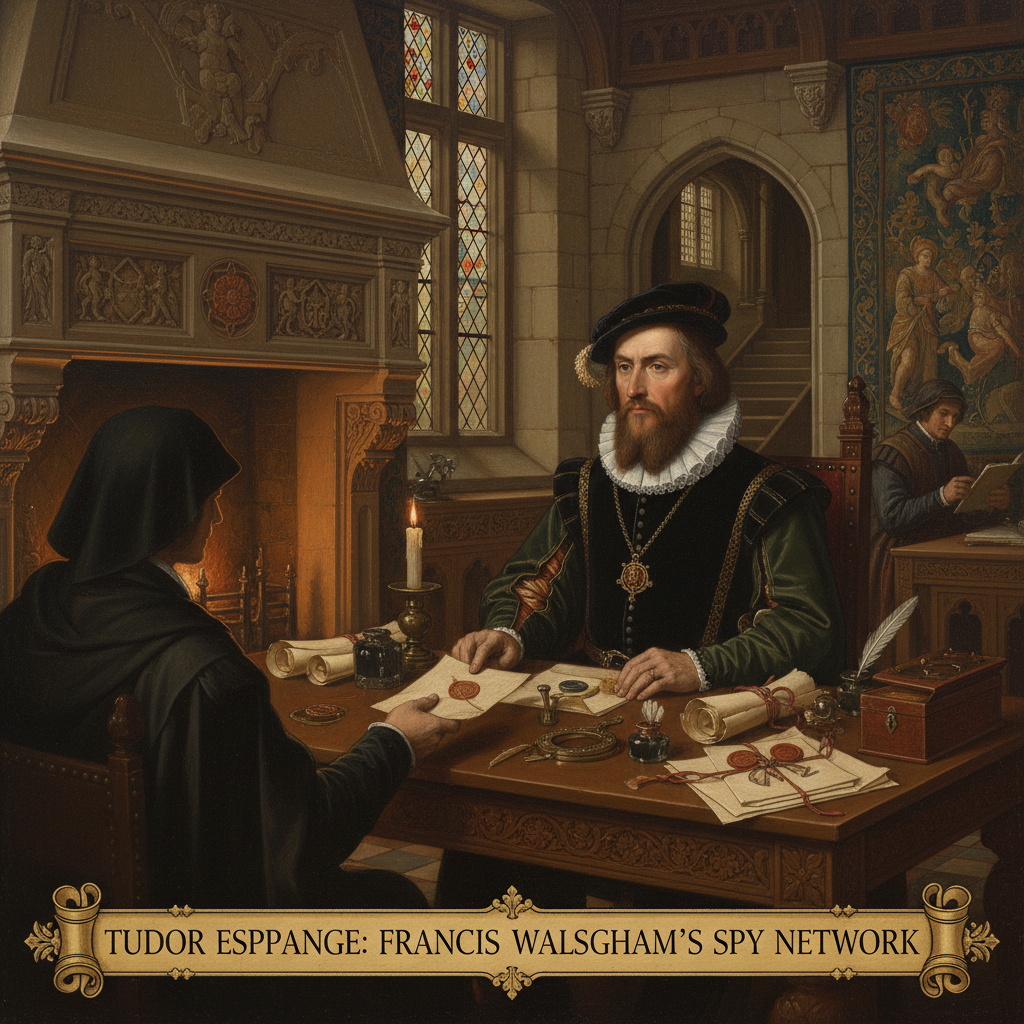
In the tumultuous world of Tudor England, where religious strife, political intrigue, and foreign threats constantly loomed, Queen Elizabeth I's reign was far from secure. Her safety, and indeed the very future of England, often rested on the unseen machinations of a man whose name became synonymous with espionage: Sir Francis Walsingham. As Elizabeth's Principal Secretary, Walsingham masterminded an elaborate, ruthless, and remarkably effective spy network that stretched across Europe, protecting the Protestant queen from countless plots and conspiracies.
Walsingham's intelligence operation was not merely a collection of informants; it was a sophisticated, multi-layered system that employed cryptographers, codebreakers, double agents, and skilled interrogators. His methods were often brutal, his reach extensive, and his dedication to Elizabeth's survival absolute. This shadowy world of Tudor espionage was a critical, yet often overlooked, pillar of Elizabethan stability, ensuring that the queen remained one step ahead of her enemies, both at home and abroad.
The Architect of Elizabethan Security: Sir Francis Walsingham
Born into a gentry family around 1532, Francis Walsingham’s early life was marked by Protestant convictions that led him into exile during the reign of Catholic Queen Mary I. This period abroad, spent cultivating contacts and observing European politics, proved invaluable. When Elizabeth ascended the throne in 1558, Walsingham quickly rose through the ranks, becoming Ambassador to France and later Principal Secretary in 1573 – a position he held until his death in 1590. It was in this role that his genius for intelligence gathering truly flourished.
Walsingham understood that information was power, especially in an age where communication was slow and unreliable. He recognised the existential threats facing Elizabeth: Catholic plots to depose her in favour of Mary, Queen of Scots; Spanish ambitions to invade England; and internal dissent. To counter these, he built an intelligence apparatus unparalleled in its time, transforming ad-hoc spying into a systematic state function.
— William Camden, Annales Rerum Gestarum Angliae et Hiberniae Regnante Elizabetha
Building the Web: Agents, Codes, and Ciphers
Walsingham's network was vast and diverse. He recruited agents from all walks of life: merchants, diplomats, priests, exiles, and even criminals. These individuals operated in key European cities like Paris, Rome, Madrid, and Brussels, infiltrating Catholic seminaries, Spanish courts, and French noble houses. His agents were often paid handsomely, but their loyalty was also secured through a mix of patriotism, blackmail, and ideological conviction.
Central to Walsingham’s success was his mastery of cryptography. He employed brilliant codebreakers like Thomas Phelippes, who could decipher even the most complex ciphers used by conspirators. Phelippes’s skill was legendary; he could not only read encrypted messages but also forge postscripts and additions, often to entrap plotters. The deciphered letters were then used as irrefutable evidence against those planning against the Queen.
- **Mail Interception:** Walsingham established a sophisticated system for intercepting and opening letters, particularly those passing through the diplomatic pouch or suspicious channels.
- **Double Agents:** He frequently employed double agents, feeding misinformation to England's enemies while extracting vital intelligence.
- **Informants:** A vast network of informants, often paid for their services, provided snippets of information that, when pieced together, revealed larger plots.
- **Torture:** While not always personally involved, Walsingham sanctioned the use of torture to extract confessions and information from captured conspirators.
Did You Know?
Francis Walsingham was known as Elizabeth I's 'Spymaster' and 'Moor' due to his dark complexion. He spent an estimated £2,000 annually of his own money on intelligence, a vast sum for the time, demonstrating his personal commitment to national security.
The Babbington Plot: Walsingham's Masterstroke
Perhaps Walsingham's most famous triumph was his role in exposing the Babington Plot of 1586. This conspiracy aimed to assassinate Elizabeth and place Mary, Queen of Scots, on the English throne. Walsingham's agents, including Gilbert Gifford, infiltrated the plot, establishing a secure, yet compromised, communication channel between Mary and the conspirators.
Letters between Mary and Anthony Babington were smuggled in beer barrels, but each message was intercepted by Walsingham's men, meticulously copied, deciphered by Phelippes, and then resealed and sent on. Crucially, Walsingham allowed the plot to develop, gathering enough evidence to prove Mary's direct involvement in the plan to assassinate Elizabeth. Phelippes even added a postscript to one of Mary's letters, asking for the names of the conspirators, which Mary obligingly provided.
— Mary, Queen of Scots, in a letter to Anthony Babington, intercepted and deciphered by Walsingham’s network. This letter sealed her fate.
The evidence gathered was undeniable. Mary, Queen of Scots, was tried, found guilty of treason, and executed in 1587, removing the greatest threat to Elizabeth's Protestant succession. This meticulous operation showcased the chilling efficiency and strategic brilliance of Walsingham's network.
The Cost of Vigilance: Walsingham's Legacy
Walsingham's relentless dedication took a heavy toll. He was constantly stressed, often ill, and died heavily in debt, having often used his own funds to finance his intelligence operations. He believed passionately in the Protestant cause and the security of England, viewing his work as a divine mission.
His methods, while effective, were undeniably harsh. He was responsible for the torture and execution of numerous individuals, and his network often operated in a morally grey area. Yet, in the dangerous political landscape of the late 16th century, many argue that such ruthlessness was a necessary evil for the survival of the English state and its queen.
Walsingham's legacy extends far beyond his lifetime. He laid the groundwork for modern intelligence gathering, demonstrating the power of systematic information collection, analysis, and covert operations. His work ensured Elizabeth I's long and relatively stable reign, allowing England to flourish culturally and politically. Without his 'eyes and ears' across Europe, the course of English history might have been dramatically different.
Conclusion: The Enduring Shadow of the Spymaster
Sir Francis Walsingham remains one of the most enigmatic and influential figures of the Tudor era. His spy network, a complex web of agents, codes, and deception, was a testament to his strategic genius and unwavering loyalty to Queen Elizabeth I. He was the unseen protector, the silent guardian whose vigilance allowed a young Protestant queen to navigate a sea of Catholic plots and foreign aggression. His story reminds us that behind the grandeur of court and the pronouncements of monarchs, the true battles for power and survival were often fought in the shadows, by individuals like Walsingham, who understood that knowledge was indeed the ultimate weapon. What other hidden figures shaped the destiny of Tudor England?
TAGS
Discussion
No comments yet
Be the first to share your thoughts on this article!
You May Also Like
Continue exploring Tudor history with these related articles

The Eye of the Queen: Francis Walsingham's Tudor Spy Network
Explore the shadowy world of Tudor espionage under Queen Elizabeth I. Discover how Sir Francis Walsingham, the 'Queen's Spymaster,' built the most sophisticated intelligence network in Europe, utilizing codebreakers, double agents, and foreign informers to thwart Catholic plots, secure the execution of Mary, Queen of Scots, and pave the way for the defeat of the Spanish Armada.

The English Reformation: How Henry VIII Changed England Forever
Explore the dramatic political and religious upheaval of the English Reformation, driven by Henry VIII's quest for a male heir. Discover how the break with Rome, the dissolution of monasteries, and the subsequent religious swings under Edward VI, Mary I, and Elizabeth I fundamentally reshaped England's culture, economy, and national identity.

The Pilgrimage of Grace: A Tudor Rebellion Unveiled
Explore the Pilgrimage of Grace, the massive 1536 Tudor rebellion against Henry VIII's religious reforms and the dissolution of monasteries. Discover its causes, key figures, and brutal suppression.
The Tower of London: Tudor England's Grim Fortress
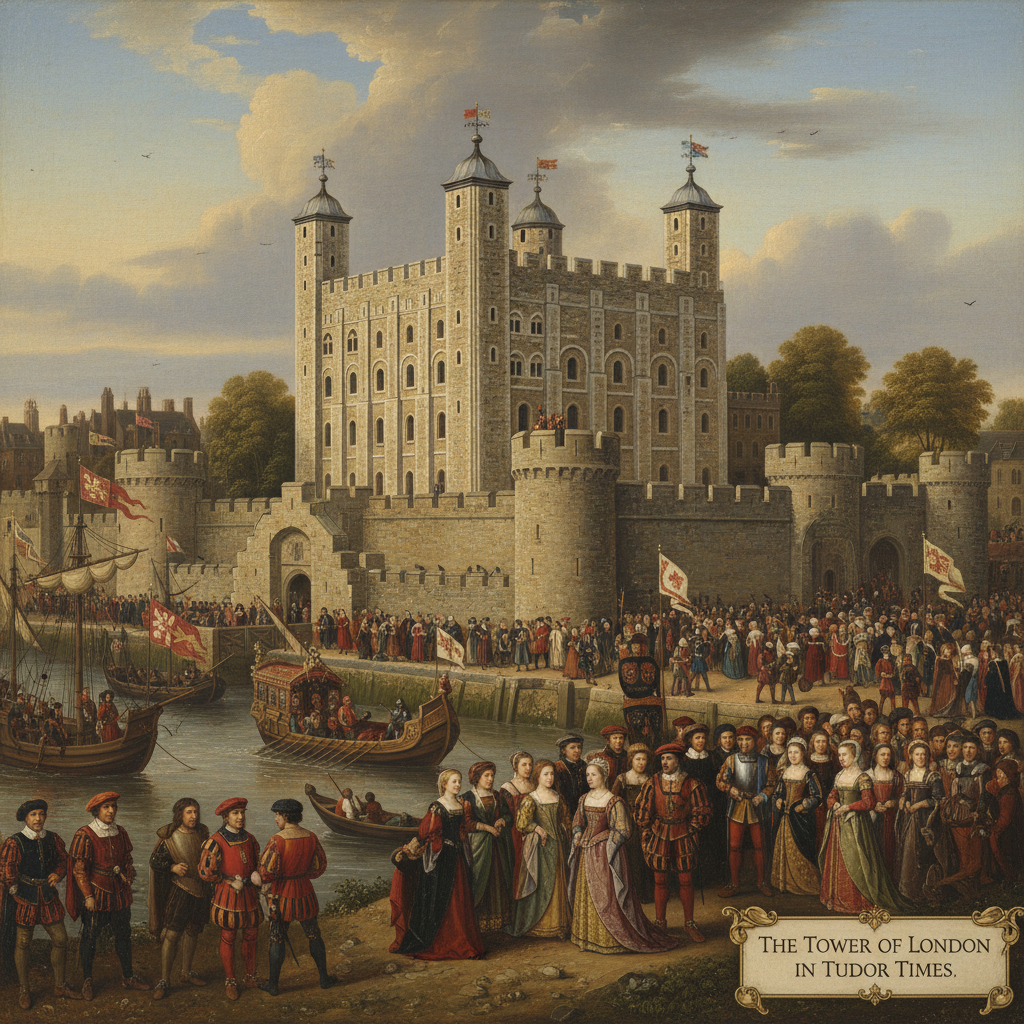
Explore the chilling history of the Tower of London during the Tudor era, a fortress that served as a royal palace, treasury, and most famously, a state prison for figures like Anne Boleyn and Lady Jane Grey. Discover its role in shaping England's tumultuous past.