The Tower of London: Tudor England's Grim Fortress
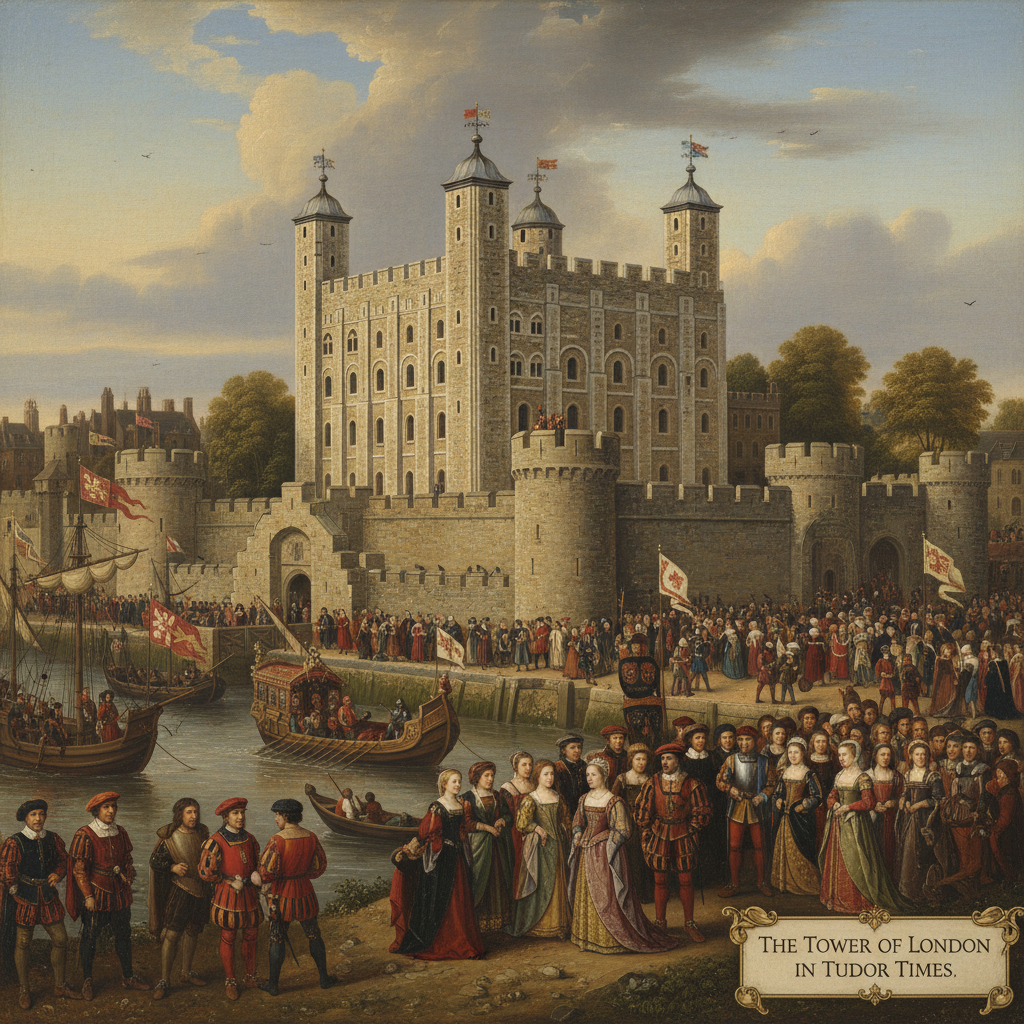
The very name 'Tower of London' conjures images of dread, intrigue, and the chilling final moments of some of England's most prominent figures. While its stones have witnessed a millennium of history, it was during the tumultuous Tudor period that this ancient fortress truly earned its fearsome reputation. More than just a royal palace or a formidable stronghold, the Tower became the stage for England's most dramatic political and religious upheavals, a place where queens met their end, and where the fate of a nation often hung in the balance within its thick walls.
A Royal Residence Turned State Prison
Before the Tudors, the Tower of London had served many purposes: a royal palace, a treasury, a mint, an armory, and even a zoo. However, under the reigns of Henry VII, Henry VIII, Edward VI, Mary I, and Elizabeth I, its role as a state prison and place of execution became tragically prominent. The Tudors, ever mindful of their precarious hold on the throne, used the Tower as a tool to consolidate power, silence dissent, and eliminate rivals. Its imposing architecture, particularly the White Tower, stood as a stark symbol of royal authority and the consequences of defiance.
Entry into the Tower as a prisoner was often a one-way journey, particularly for those accused of treason. The infamous Traitors' Gate, a water-gate beneath St. Thomas's Tower, was the most common point of arrival for high-profile captives, delivered by barge from Westminster. This symbolic entrance marked the end of their freedom and often, the beginning of their end.
The Tower Under Henry VIII: A Reign of Terror
No monarch utilized the Tower's grim potential more extensively than Henry VIII. His relentless pursuit of a male heir and his break from the Roman Catholic Church led to an unprecedented number of executions within its confines. The Tower became synonymous with the King's wrath, a place where loyalty was tested, and failure meant a swift, brutal end.
- Sir Thomas More: The former Lord Chancellor, a man of unwavering principle, was imprisoned and executed in 1535 for refusing to accept the Act of Supremacy, which declared Henry as the head of the Church of England. His final words on the scaffold were reportedly, "I die the King's good servant, but God's first."
- Anne Boleyn: Perhaps the most famous victim, Henry's second queen was accused of treason, incest, and adultery. Imprisoned in the Queen's House, she was executed on Tower Hill in 1536, a mere three years after her coronation. Her fall from grace was swift and brutal, a stark warning to anyone who might displease the King.
- Thomas Cromwell: The architect of the English Reformation and Henry's chief minister, Cromwell himself fell victim to the King's volatile temper. Accused of treason and heresy, he was executed in 1540, a testament to the unpredictable nature of Tudor court politics.
"The Tower of London, that ancient fortress, was the stage where England's greatest dramas unfolded, where queens wept, and where the axe fell on the necks of the mighty." – Alison Weir, Historian
Did You Know?
Despite its fearsome reputation, not all prisoners in the Tower were kept in squalid conditions. High-ranking individuals, like Sir Walter Raleigh, were often allowed relatively comfortable lodgings, sometimes even bringing their servants and furniture. Raleigh even conducted scientific experiments and wrote his 'History of the World' during his long imprisonment!
Royal Prisoners and Political Intrigue
The Tudor Tower wasn't just for convicted traitors; it also housed royal family members whose existence posed a threat to the reigning monarch. The fate of these royal prisoners often determined the future of the English crown.
The Princes in the Tower
Though predating the Tudor dynasty, the mystery of the 'Princes in the Tower' – Edward V and his younger brother Richard, Duke of York – cast a long shadow over the early Tudor period. Imprisoned by their uncle Richard III, they vanished in 1483. Their presumed murder helped fuel the animosity against Richard and paved the way for Henry Tudor's ascension to the throne. The enduring mystery served as a potent reminder of the dangers of royal bloodlines.
Lady Jane Grey: The Nine Days' Queen
The brief reign of Lady Jane Grey in 1553 is one of the most poignant tales of the Tower. A devout Protestant, she was reluctantly proclaimed queen after the death of Edward VI, in an attempt to prevent Catholic Mary Tudor from taking the throne. Her reign lasted only nine days before Mary's popular support swept her to power. Jane, her husband Lord Guildford Dudley, and her father were all imprisoned in the Tower. Despite Mary's initial reluctance to execute her young cousin, political pressures eventually led to Jane's execution on Tower Hill in February 1554, a tragic victim of dynastic ambition.
Elizabeth I's Imprisonment
Perhaps the most remarkable royal prisoner was Princess Elizabeth, later Queen Elizabeth I. Imprisoned by her half-sister Queen Mary I in 1554 on suspicion of involvement in Wyatt's Rebellion, Elizabeth spent a terrifying period within the Tower's walls. Her arrival through Traitors' Gate was a moment of profound humiliation and fear. She famously declared, "I am no traitor!" Her survival and eventual ascension to the throne cemented the Tower's place in her personal history and in the nation's memory. Her experience undoubtedly shaped her cautious and often ruthless approach to governance.
Life and Death Within the Walls
Life for prisoners in the Tower varied greatly depending on their status, wealth, and the nature of their alleged crimes. While some, like Anne Boleyn, were afforded a degree of comfort in the Queen's House, others faced harsh conditions in dungeons like the infamous Beauchamp Tower or the crypt of St. John's Chapel.
Torture, though not routinely used for extracting confessions in England as it was on the continent, was certainly employed in the Tower, particularly on those accused of religious dissent or treason. The rack and the 'Scavenger's Daughter' were among the instruments used to extract information or confessions, leaving prisoners broken both physically and mentally.
Executions were a grim spectacle. High-ranking prisoners, such as Anne Boleyn and Lady Jane Grey, were granted the 'privilege' of a private execution on Tower Green, away from the public gaze. Their bodies were often interred in the Chapel Royal of St. Peter ad Vincula, within the Tower complex. Lesser mortals, and those whose deaths were meant to serve as a public warning, were executed on Tower Hill, just outside the fortress walls, before vast crowds.
The Tower's Guardians: Yeoman Warders
Throughout the Tudor period, the Tower was guarded by the Yeoman Warders, often referred to as 'Beefeaters.' These loyal servants, many of whom were former soldiers, were responsible for the security of the fortress, its prisoners, and its valuable contents. Their distinctive uniform and their role as guardians of this historic site have continued to this day, a living link to the Tower's Tudor past.
Legacy of the Tudor Tower
The Tower of London, during the Tudor era, was far more than just a castle; it was a crucible where the fate of England was forged. It witnessed the rise and fall of queens, the brutal suppression of religious dissent, and the ruthless consolidation of royal power. Its stones hold countless stories of bravery, betrayal, and despair, echoing the turbulent spirit of the age.
Today, as visitors walk its ancient grounds, the echoes of Tudor history are palpable. From the chilling cells of the Beauchamp Tower, adorned with the carved graffiti of desperate prisoners, to the serene Chapel Royal where headless bodies lie, the Tower stands as a powerful, enduring monument to the human drama that unfolded within its walls. It reminds us that even in the heart of royal power, vulnerability and mortality were ever-present, making it a truly unforgettable symbol of Tudor England.
TAGS
Discussion
No comments yet
Be the first to share your thoughts on this article!
You May Also Like
Continue exploring Tudor history with these related articles

Hampton Court Palace: A Tudor Masterpiece and Royal Powerhouse
Explore the history of Hampton Court Palace, the magnificent Tudor residence built by Cardinal Wolsey and seized by Henry VIII. Discover the Great Hall, the Royal Tennis Court, and the dramatic stories of the six queens.

Whitehall Palace: The Lost Heart of Tudor Power
Whitehall Palace, seized by Henry VIII from Cardinal Wolsey, became the largest palace in Europe and the monumental heart of Tudor power, witnessing the Reformation, royal marriages, and political intrigue.

The Tower of London: Citadel of Power in the Tudor Era
Explore the Tower of London during the Tudor era (1485–1603), examining its transformation from a royal palace and treasury into the infamous state prison that housed and executed figures like Anne Boleyn and Catherine Howard.

The Enduring Charm of Tudor Half-Timbered Houses
Explore the iconic half-timbered architecture of the Tudor era. Learn how these distinctive black-and-white houses served as status symbols, reflected the 'Great Rebuilding,' and utilized innovative construction techniques.