The Boleyn Family: From Gentry to Royalty
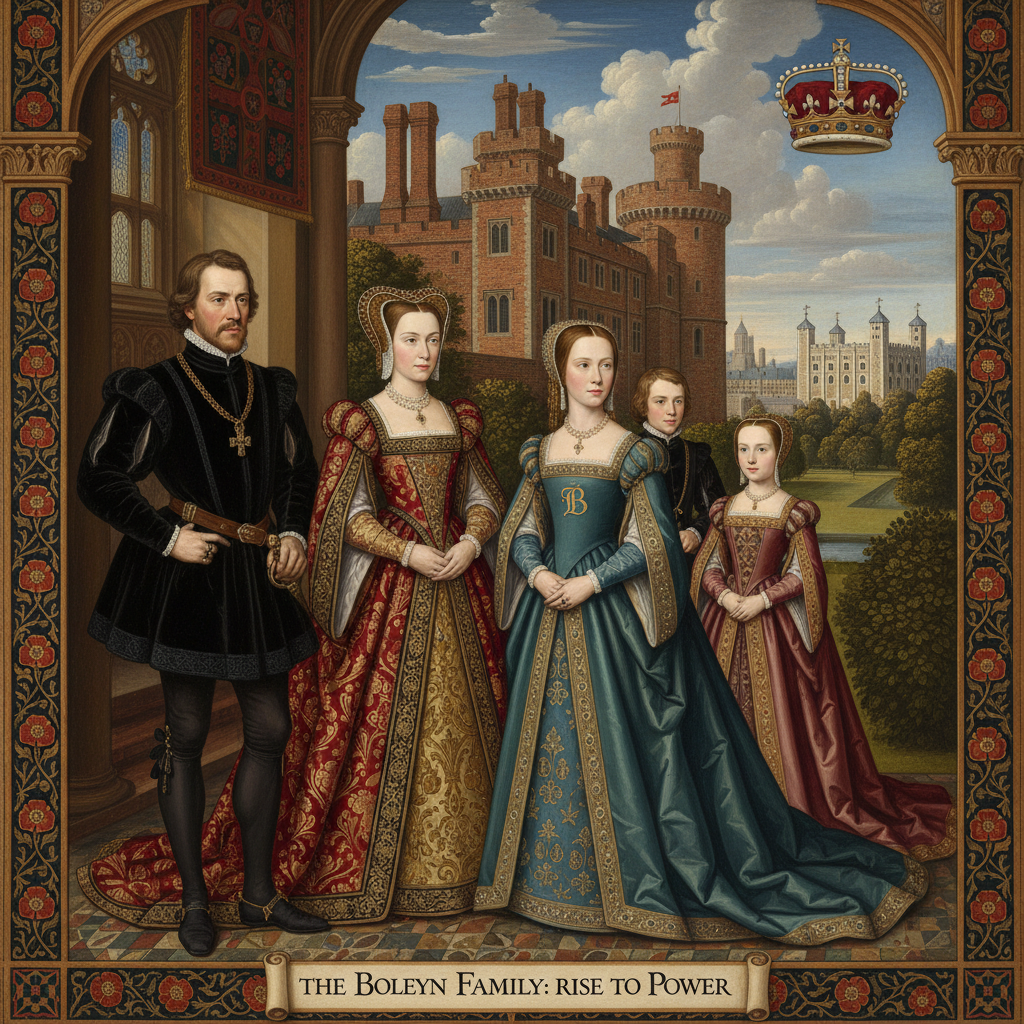
In the grand tapestry of Tudor England, few families experienced as meteoric and ultimately tragic a rise as the Boleyns. Their story is not merely one of ambition and royal favour, but a fascinating exploration of social mobility, political maneuvering, and the seismic shifts that defined the reign of Henry VIII. From relatively humble gentry origins, the Boleyns ascended to the very pinnacle of power, their name forever etched into the annals of British history, largely thanks to the captivating figure of Anne Boleyn.
The Foundations of Fortune: Sir Thomas Boleyn's Ambition
The Boleyn family's ascent was meticulously engineered, primarily by Sir Thomas Boleyn, Anne's father. Born around 1477, Thomas was the son of Sir William Boleyn and Lady Margaret Butler, a woman of significant Irish noble lineage. This marriage was crucial, connecting the Boleyns to powerful aristocratic families like the Butlers, Earls of Ormond. While not of the highest nobility, the Boleyns were well-established gentry, possessing substantial landholdings in Norfolk and Kent, including the magnificent Hever Castle.
Thomas Boleyn was a man of considerable intellect and charm, fluent in several languages, and possessed a keen understanding of court politics. His early career saw him serving Henry VII, undertaking diplomatic missions that honed his skills and brought him to the attention of the future Henry VIII. When Henry VIII ascended the throne in 1509, Thomas Boleyn was perfectly positioned to capitalize on the new king's youthful exuberance and desire for a glittering court.
“He was a man of great learning and wit, and highly esteemed by the King for his diplomatic abilities.” – George Wyatt, grandson of Thomas Boleyn, on Sir Thomas Boleyn.
Did You Know?
Sir Thomas Boleyn was one of the English ambassadors sent to negotiate the marriage of Henry VIII's sister, Mary Tudor, to King Louis XII of France. He later accompanied Mary to France, where his daughters, Mary and Anne, would also spend formative years.
Strategic Marriages and Court Connections
Thomas Boleyn's greatest asset, beyond his own abilities, was his family. He married Elizabeth Howard, daughter of Thomas Howard, 2nd Duke of Norfolk. This union was a masterstroke, linking the Boleyns directly to one of England's most ancient and powerful noble families. The Howards were not only influential at court but were also related to the royal family through their descent from Edward I. This marriage provided Thomas with an unparalleled network of connections and a significant boost in status.
- **Elizabeth Howard:** Daughter of the 2nd Duke of Norfolk, providing aristocratic lineage.
- **Mary Boleyn:** Eldest daughter, became a mistress of Henry VIII.
- **George Boleyn:** Son, Lord Rochford, a talented courtier and diplomat.
- **Anne Boleyn:** Younger daughter, the future Queen of England.
The Boleyn children were raised with an eye towards court service. Mary and Anne, in particular, received exceptional educations, spending time at the sophisticated courts of Margaret of Austria in the Netherlands and Queen Claude of France. These experiences imbued them with a continental polish, linguistic skills, and a sophisticated understanding of courtly love and etiquette that set them apart from many English ladies.
Anne Boleyn: The King's Great Matter
The true catalyst for the Boleyn family's unprecedented rise was Anne. Upon her return to England around 1521, she quickly distinguished herself at court. Initially, she served as a lady-in-waiting to Queen Catherine of Aragon, Henry VIII's first wife. Anne's intelligence, wit, and distinctive style captivated the King. Unlike many women of her time, Anne was not conventionally beautiful by contemporary standards, but her vivacity, sharp mind, and fashionable French attire made her irresistible to Henry.
What began as a flirtation soon escalated into an all-consuming passion for Henry. He became determined to marry Anne, believing she could provide him with the male heir that Catherine of Aragon had failed to deliver. This desire, coupled with Henry's growing conviction that his marriage to Catherine was unlawful in God's eyes (as she had been his brother's widow), sparked the infamous 'King's Great Matter' – his quest for an annulment.
The Boleyn Ascendancy: Power and Privilege
As Henry's affection for Anne grew, so did the fortunes of her family. Sir Thomas Boleyn was showered with titles and wealth. He was created Viscount Rochford in 1525 and then Earl of Wiltshire and Earl of Ormond in 1529. His son, George Boleyn, was made Viscount Rochford, a Privy Councillor, and a key diplomat. The Boleyns became immensely wealthy, acquiring lands and offices that cemented their position among the most powerful families in England.
This rapid ascent, however, was not without its detractors. Many in the old nobility resented the Boleyns' sudden rise, viewing them as upstarts who had usurped the traditional order. Cardinal Wolsey, Henry's chief minister, initially supported the King's desire for an annulment but soon found his own power threatened by Anne's direct influence over Henry. His eventual downfall in 1529 was largely orchestrated by the Boleyn faction.
“The Boleyns were now at the height of their power, their influence permeating every aspect of the English court.” – Historian David Starkey.
The Crown and the Fall: A Fateful Reign
In January 1533, Henry VIII secretly married Anne Boleyn, and she was crowned Queen of England in June of the same year. Her reign marked a pivotal moment in English history, not only for the Boleyns but for the nation itself. Anne's marriage to Henry solidified the break with Rome, leading to the English Reformation and the establishment of the Church of England with Henry as its Supreme Head. She gave birth to Princess Elizabeth (the future Elizabeth I) in September 1533, but her failure to produce a male heir ultimately sealed her fate.
The same ambition and political acumen that had propelled the Boleyns to power also contributed to their downfall. Anne's strong personality, her perceived arrogance, and the political enemies she had made during her rise began to turn Henry against her. When she suffered miscarriages and failed to produce a living son, Henry's affections waned, and his eyes turned to Jane Seymour.
In May 1536, Anne Boleyn, her brother George, and several other men were arrested on charges of treason, adultery, and incest. The charges were almost certainly fabricated, a desperate attempt by Henry and his chief minister, Thomas Cromwell, to rid themselves of an inconvenient queen. Anne was tried, found guilty, and executed on May 19, 1536, at the Tower of London. George Boleyn was executed two days earlier.
Legacy Beyond Tragedy
The fall of Anne and George Boleyn was swift and brutal, shattering the family's immediate hold on power. Sir Thomas Boleyn, though spared execution, was stripped of many of his offices and titles, dying a broken man in 1539. Mary Boleyn, who had been banished from court years earlier for marrying without royal consent, survived the purge, living a relatively quiet life.
Yet, the Boleyn legacy far outlasted their personal tragedies. Through Anne, they produced one of England's most iconic and successful monarchs: Queen Elizabeth I. Elizabeth's reign, often called the 'Golden Age,' saw England emerge as a major European power, a testament to the intelligence and strength inherited from her mother. The Boleyn family's story is a compelling reminder of the volatile nature of power in the Tudor court, a narrative of ambition, love, betrayal, and enduring historical impact.
Their rise and fall continue to fascinate, offering a window into a world where personal desires could reshape nations and where a single family's fortunes could alter the course of history forever. To delve deeper into the lives of Henry VIII's wives or the broader context of the English Reformation, explore more articles on The Tudor Foundation.
TAGS
Discussion
No comments yet
Be the first to share your thoughts on this article!
You May Also Like
Continue exploring Tudor history with these related articles

Catherine of Aragon: The Spanish Princess Who Defined the Tudor Era
Explore the life of Catherine of Aragon, the Spanish Infanta whose marriage to Henry VIII and subsequent refusal to accept an annulment triggered the English Reformation and defined the Tudor era.

The Sickening Truth: Medicine and Health in Tudor England
Dive into the precarious world of Tudor medicine, exploring the reliance on the Four Humours, the terrifying reality of the plague, and the often-dangerous treatments used by physicians, surgeons, and apothecaries in 16th-century England.

The Boleyn Ascent: How a Norfolk Family Conquered the Tudor Court
Explore the astonishing three-generation rise of the Boleyn family, from ambitious London merchants to the pinnacle of power, culminating in Anne Boleyn's controversial queenship and the English Reformation.

The Majesty and Mystery of Tudor Gardens and Landscapes
Explore the sophisticated world of Tudor gardens and landscapes, revealing how these meticulously designed spaces served as powerful symbols of status, utility, and Renaissance order during the reigns of Henry VIII and Elizabeth I.